
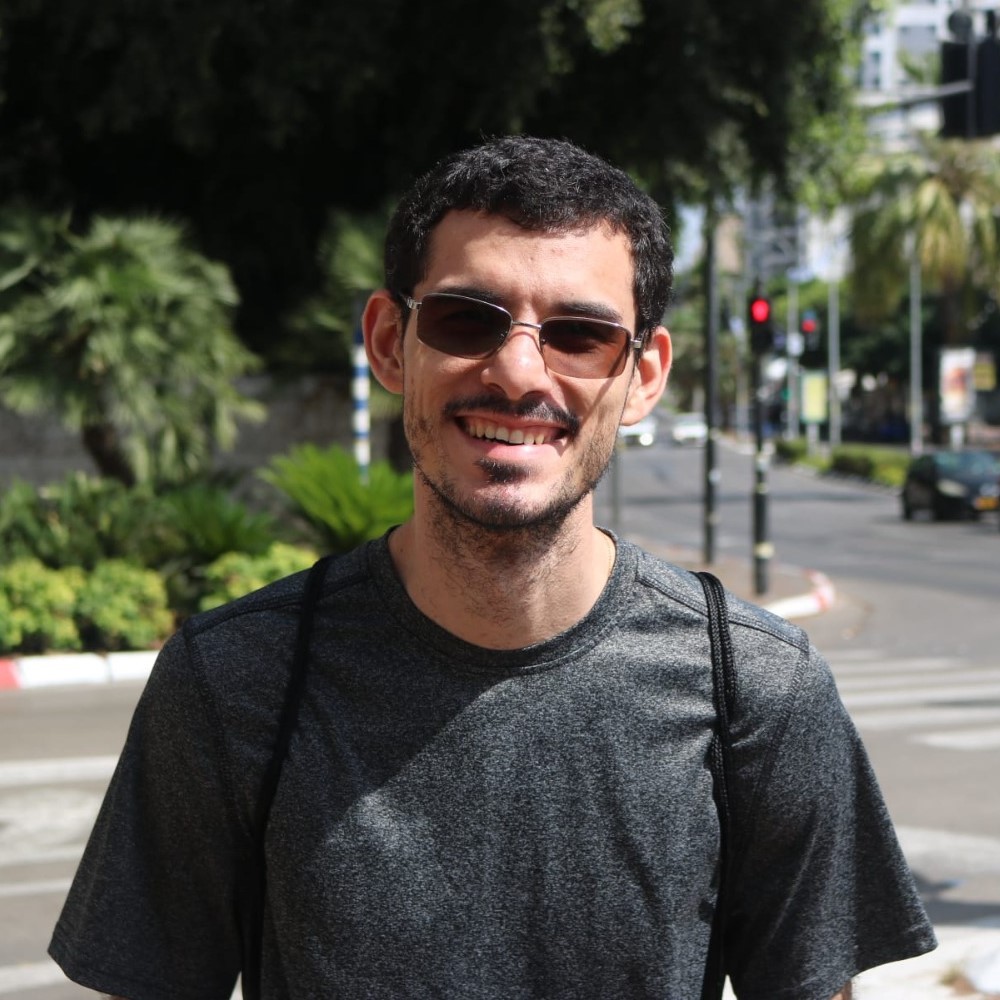
This talk introduces a ridge penalization scheme to enhance the numerical stability of conditional maximum likelihood estimation of the parameters indexing the betaARMA model. The proposed approach involves adding a simple penalty term to the conditional log-likelihood function to enhance its curvature. This modification reduces the chance of convergence failures and implausible estimates. We also present a bootstrap-based parameter estimation strategy. It is particularly useful when penalization alone is insufficient to address numerical issues, providing a complementary solution for obtaining more reliable estimates. Our numerical results show the effectiveness of the proposed approaches in addressing numerical instability issues in betaARMA parameter estimation. Empirical applications are presented and discussed. Joint work with Francisco Cribari-Neto and Everton Costa.

The electrocardiogram (ECG) is a fundamental tool in clinical practice for assessing cardiac electrical activity, and establishing normal reference ranges is essential for the accurate identification of abnormalities. Recent studies highlight the variability of electrocardiographic parameters based on factors such as age and sex, and emphasize the importance of specific reference values for the Latin American population. In this context, it is observed that measures such as heart rate, PR and QT intervals, and wave durations exhibit asymmetric and heterogeneous distributions throughout life, which limits approaches based exclusively on the mean. Given this, this study aims to analyze electrocardiographic data using parametric quantile regression models, allowing for an investigation of the behavior of different quantiles of the distribution of variables of interest as a function of covariates such as age and sex. Unlike traditional mean-based regression, quantile regression enables a more complete description of the conditional distribution, making it particularly suitable for data with heteroscedasticity and asymmetry, as observed in ECG parameters.

A new modeling approach for survival analysis is proposed by considering that the number of competing causes related to the occurrence of the event of interest may be correlated. Unlike the traditional assumption of independence among these causes, the model acknowledges the biological complexity observed in testicular cancer patients, where different factors interact in an unobservable manner. Specifically, it is assumed that the number of competing causes follows a zero-inflated geometric (ZIG) distribution with structural dependence, allowing the capture of latent aspects specific to this type of cancer that cannot be directly quantified. Statistical properties of the model are presented, and parameter estimation is carried out through the maximum likelihood method. Additionally, a Monte Carlo simulation study is conducted to assess the behavior of the estimators and the accuracy of the obtained confidence intervals. Finally, the model is applied to a real dataset comprising testicular cancer cases registered in São Paulo, Brazil, demonstrating its competitive performance relative to classical models and reinforcing its usefulness in practical applications.

Point pattern data often exhibit features such as abrupt changes, hotspots and spatially varying dependence in local intensity. Under a Poisson process framework, these correspond to discontinuities and nonstationarity in the underlying intensity function. These features are difficult to capture with standard modeling approaches. This work proposes a spatial Cox process model in which nonstationarity is induced through a random partition of the spatial domain, with conditionally independent Gaussian process priors specified across the resulting regions. This construction allows for heterogeneous spatial behavior, including sharp transitions in intensity. A discretization-free MCMC algorithm is developed to target the infinite-dimensional posterior distribution without approximation, thus ensuring exact inference. The random partition framework via Voronoi tessellation also reduces the computational burden associated with Gaussian process models. Spatial covariates can be incorporated to account for structured variation in intensity. The proposed methodology is evaluated through synthetic examples and real-world applications, demonstrating its ability to flexibly capture complex spatial structures. The model performs competitively, outperforming stationary and nonstationary alternatives in a variety of scenarios. Recent computational methods are used, enabling scalability to large datasets while preserving exactness.